Engineering Code Review & Numerical Solver Improvement
Project Overview
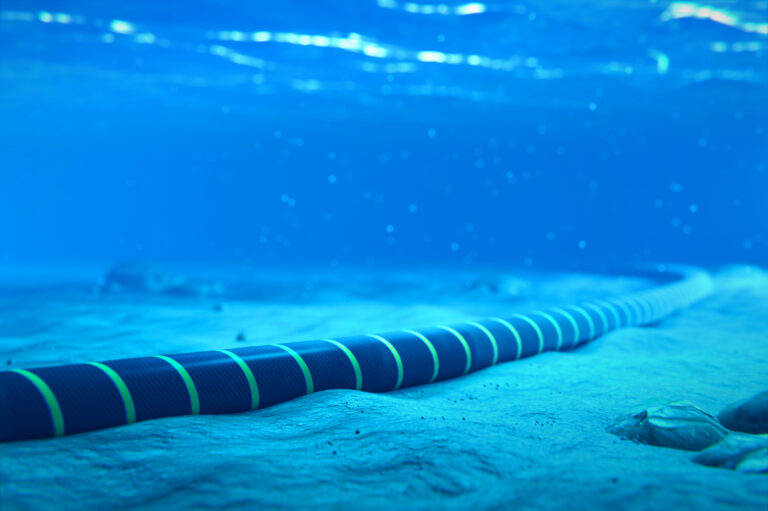
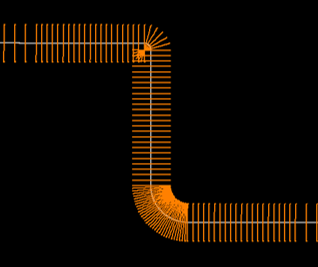
PDL was engaged to investigate persistent convergence issues within a proprietary engineering calculation tool used to predict bending moments in flexible pipe systems. The numerical script formed a critical part of the client's engineering workflows, yet recurring failures and unpredictable behaviour were impacting engineering efficiency and confidence in the tool's outputs.
Our Solution
Our engineers deployed a comprehensive suite of simulation tools, including ANSYS Mechanical for structural analysis and ANSYS Fluent for thermal-fluid interaction. We developed a detailed 3D model of the component, applying realistic boundary conditions and material properties. Key aspects of our solution included:
Material Characterization : Incorporating advanced material models to accurately represent behavior under irradiation and high temperatures
Topology Optimization : Identifying optimal material distribution to reduce weight while maintaining structural integrity.
Thermal-Structural Coupling : Simulating the interaction between temperature fields and structural deformation.
Fatigue Life Prediction : Performing high-cycle and low-cycle fatigue analysis to predict component lifespan.