THORP Cooling Pond CFD Safety Assessment
Project Overview
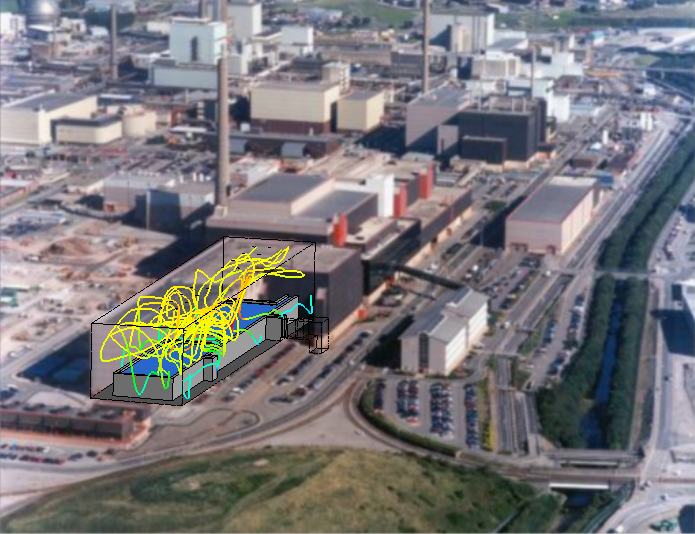
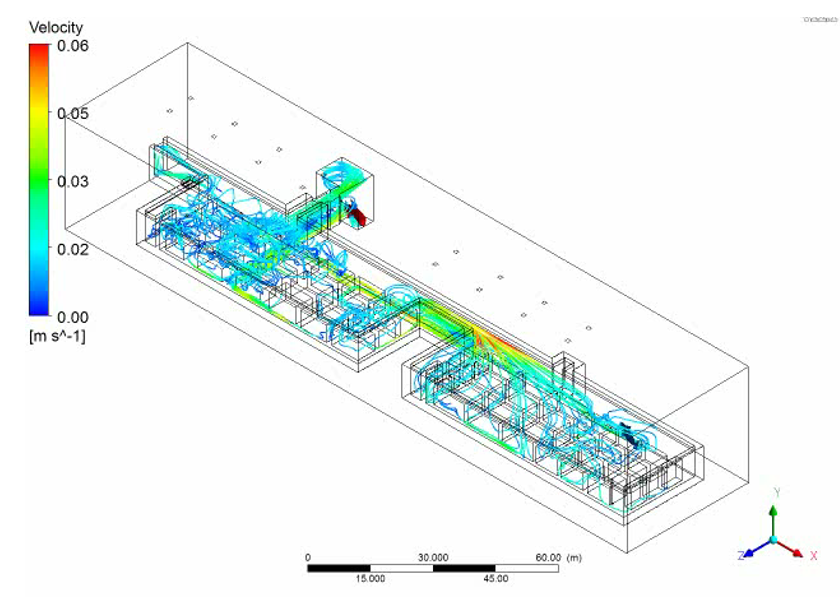
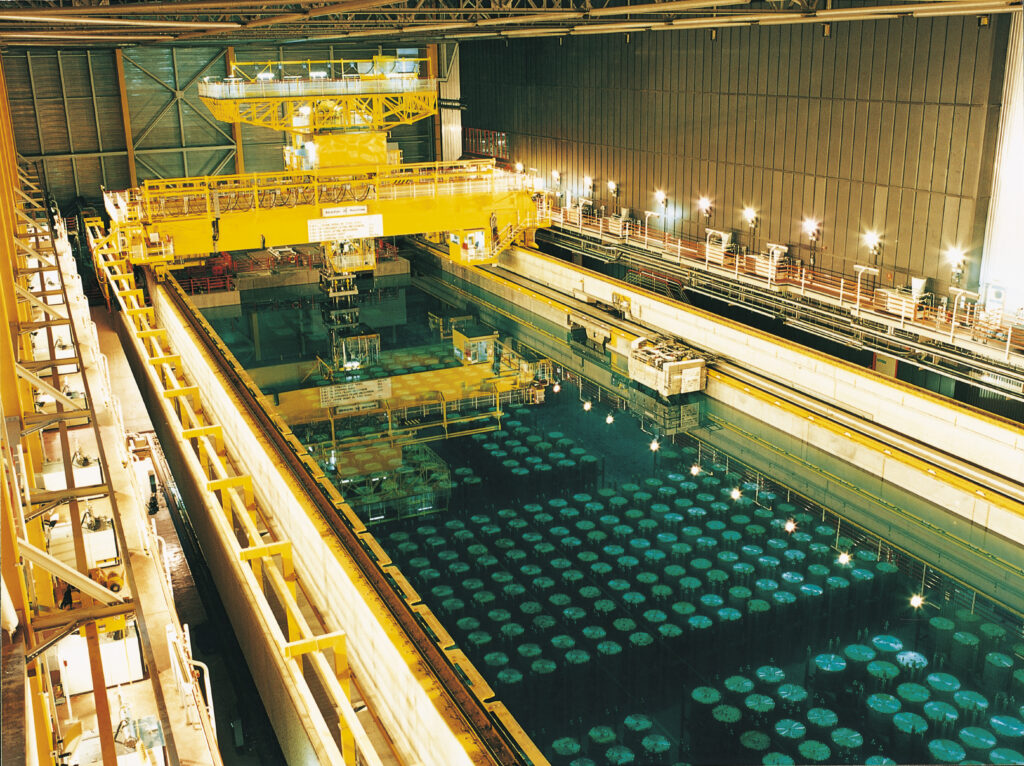
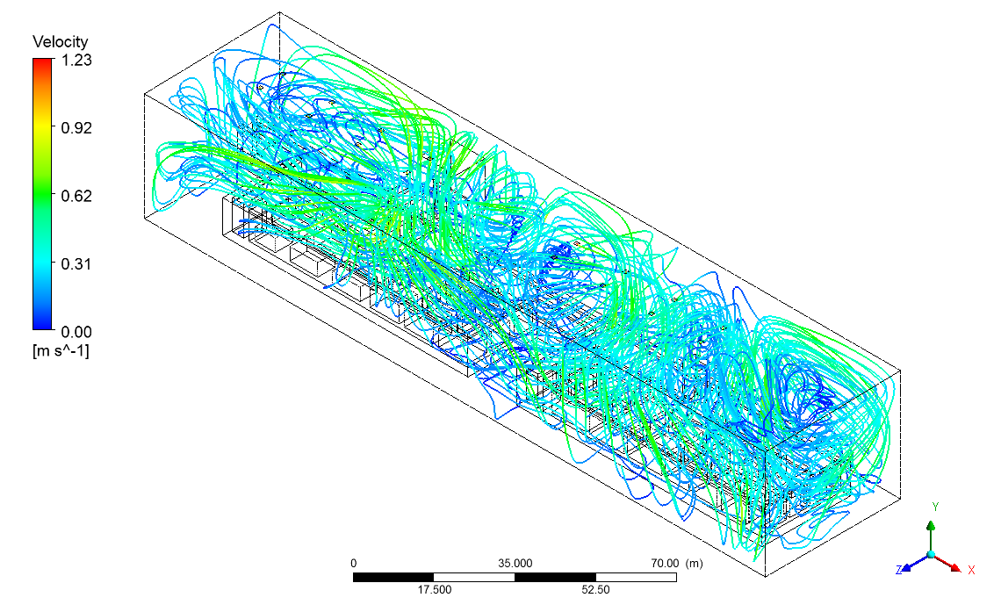
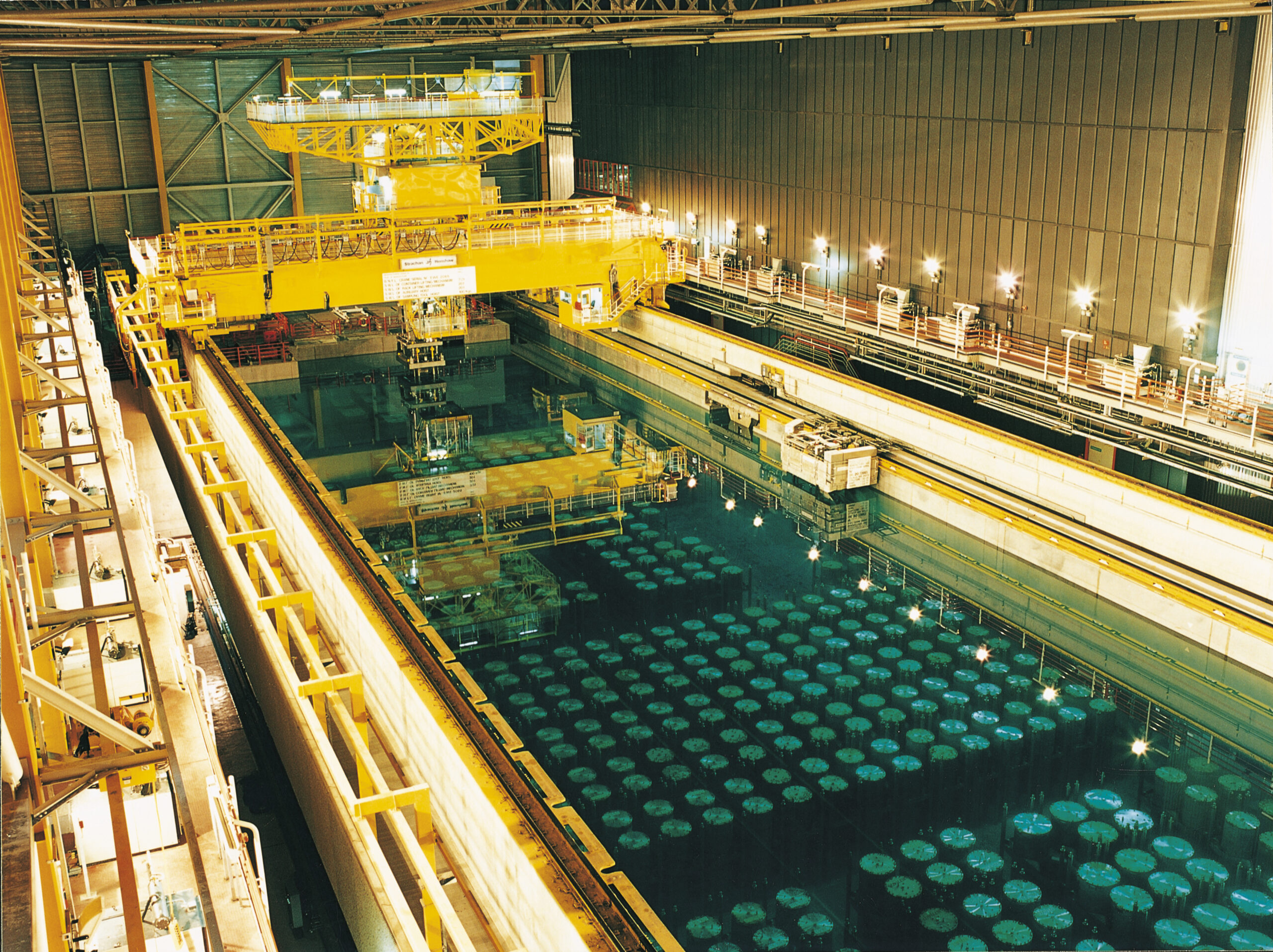
PDL supported Sellafield in the assessment of the cooling pond systems within the Thermal Oxide Reprocessing Plant (THORP). The project formed part of a wider safety case review and focused on understanding the plant's response to a range of cooling system failure scenarios. Using advanced transient Computational Fluid Dynamics (CFD) techniques, PDL developed a validated numerical model capable of accurately predicting thermal and fluid flow behaviour within the facility under both normal and fault conditions.
Our Solution
Our engineers deployed a comprehensive suite of simulation tools, including ANSYS Mechanical for structural analysis and ANSYS Fluent for thermal-fluid interaction. We developed a detailed 3D model of the component, applying realistic boundary conditions and material properties. Key aspects of our solution included:
Material Characterization : Incorporating advanced material models to accurately represent behavior under irradiation and high temperatures
Topology Optimization : Identifying optimal material distribution to reduce weight while maintaining structural integrity.
Thermal-Structural Coupling : Simulating the interaction between temperature fields and structural deformation.
Fatigue Life Prediction : Performing high-cycle and low-cycle fatigue analysis to predict component lifespan.